



How Poor Cabling Causes Network Problems
Your business network is only as strong as the cabling behind it. Computers, phones, printers, servers, wireless access points, security cameras, access control systems, and cloud applications all depend on reliable connections. When cabling is damaged, outdated, disorganized, or poorly installed, the entire business can feel the impact.
Poor cabling can cause slow internet, dropped connections, unreliable WiFi, phone issues, camera outages, and frustrating downtime. The challenge is that cabling problems are not always easy to see. A cable may look fine from the outside but still create performance issues behind walls, above ceilings, under desks, or inside the network closet.
At Unify Marketing & Technology Solutions, we help businesses build reliable technology environments through structured cabling, network cabling services, network security, managed IT, business phone systems, cloud services, and infrastructure planning. If your business is dealing with recurring network problems, the wiring behind your systems may be part of the issue.
What Is Structured Cabling?
Structured cabling is an organized approach to network wiring. Instead of running random cables every time a new device is added, structured cabling uses a planned system of data cables, wall jacks, patch panels, racks, and labeled connections.
The goal is to create a clean, reliable, and scalable foundation for your business technology. A well-designed cabling system supports computers, servers, phones, wireless access points, printers, cameras, access control systems, and other network-connected devices.
When structured cabling is installed correctly, it becomes easier to maintain, troubleshoot, expand, and secure your network. It also helps reduce confusion when your business grows, moves offices, adds employees, upgrades phones, installs cameras, or expands WiFi coverage.
Why Cabling Problems Are Easy to Overlook
Many business owners assume network problems are caused by the internet provider, firewall, computers, or WiFi equipment. Sometimes that is true. However, poor cabling can create many of the same symptoms.
A bad cable can make a fast internet connection feel slow. A damaged wall jack can cause a workstation to disconnect. A poorly terminated cable can create packet loss. A mislabeled patch panel can make a simple troubleshooting task take much longer than necessary.
Cabling issues are often overlooked because they are hidden. They may be inside walls, above drop ceilings, behind desks, inside racks, or buried in a messy network closet. When issues keep coming back and the obvious causes have already been checked, it may be time to have a professional network wiring service review the cabling.
How Poor Cabling Slows Down Your Network
Slow network performance is one of the most common signs of poor cabling. A business may pay for faster internet, install modern switches, and update computers, but old or damaged cabling can still hold everything back.
Cabling can slow the network when cables are damaged, kinked, too long, poorly terminated, connected through worn patch cables, or affected by electrical interference. Older cable types may also limit speed, especially if your business has upgraded internet service, added cloud applications, or increased the number of connected devices.
Poor cabling may cause:
- Slow internet speeds in certain rooms or work areas
- Random device disconnects
- Dropped VoIP calls or poor call quality
- WiFi access points losing connection
- Security cameras or access control devices going offline
If the network feels slow in only certain offices, desks, or areas of the building, the cabling should be inspected. Unify’s Infrastructure Services focus on creating reliable wired and wireless performance, reducing downtime, and helping businesses build a technology foundation that supports long-term growth.
Dropped Connections May Start with the Cable
A dropped connection can interrupt work, disconnect a phone call, take a printer offline, or cause a camera to stop recording. When the problem happens randomly, it can be difficult to diagnose.
Poor cabling can cause dropped connections when the physical connection is unstable. Even a small issue with a connector, wall plate, patch cable, patch panel, or cable run can create intermittent failures. The device may work one moment and fail the next.
These issues can affect computers, VoIP phones, wireless access points, security cameras, time clocks, point-of-sale systems, and access control equipment. A trained technician can test cable runs, inspect terminations, trace connections, and identify weak points in the wiring.
WiFi Problems Are Not Always Wireless Problems
When WiFi is unreliable, many businesses assume the access points need to be replaced. That may be true, but WiFi problems are not always wireless problems. Every wireless access point still needs a strong wired connection back to the network.
If the cable feeding an access point is damaged, outdated, poorly terminated, or connected to an overloaded switch, users may experience slow speeds, random drops, poor coverage, or inconsistent connectivity. A business may replace access points and still have problems if the cabling behind them is weak.
Structured cabling helps support a stronger wireless network by giving access points reliable wired connections. It also makes it easier to add new access points in the right locations as the business grows. Unify’s Network Security, Firewalls & Wireless Services can help businesses review the full network, not just the devices employees see.
Cabling Matters for VoIP Phone Quality
Modern business phone systems often rely on the data network. If your business uses VoIP phones, cloud phone systems, or network-connected desk phones, cabling matters.
VoIP phones need a stable network path from the phone to the wall jack, patch panel, switch, firewall, and internet connection. If any part of that path is unreliable, call quality can suffer. Poor cabling can contribute to dropped calls, choppy audio, delayed audio, phones rebooting, phones losing connection, or calls failing unexpectedly.
This is one reason professional network cabling services are important when installing or upgrading a business phone system. The phone system can only perform as well as the network supporting it. Unify’s Business VoIP Solutions can help businesses improve communication, but the cabling and network infrastructure behind the phones must also be reliable.
Security Cameras and Access Control Depend on Good Cabling
Security cameras and access control systems often connect through the same network infrastructure as computers and phones. That means cabling problems can affect physical security too.
Poor cabling may cause cameras to disconnect, recordings to skip, remote viewing to fail, access control panels to lose connection, or door events to report incorrectly. If cameras are powered through network cabling using Power over Ethernet, the cable must support both data and power reliably.
A proper structured cabling plan helps support camera systems, access control, and future troubleshooting. Unify’s Security Services and Access Control Solutions can help businesses protect their property, but those systems still need stable cabling, switching, power, and network design behind them.
Messy Network Closets Make Everything Harder
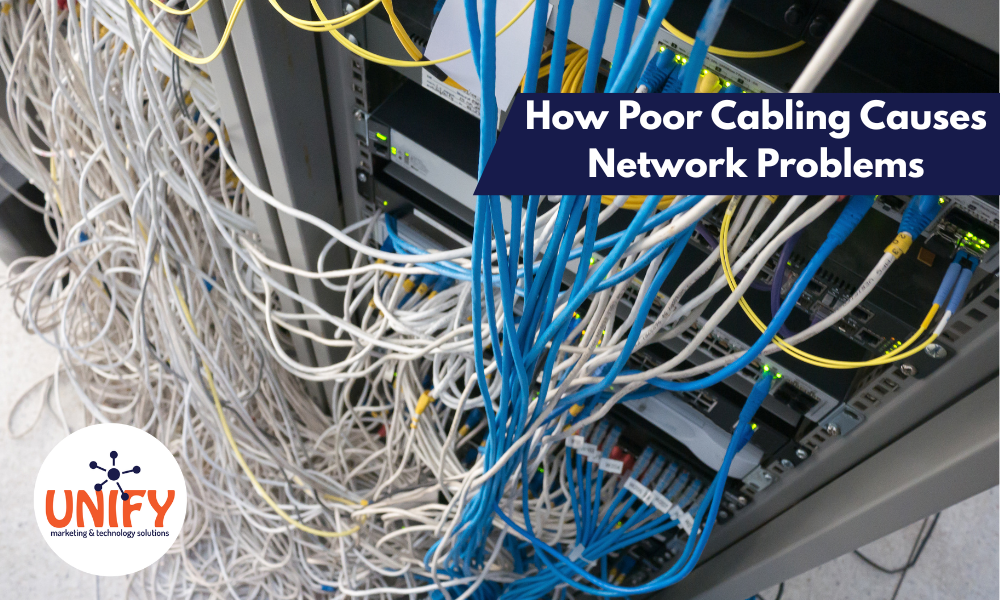
A messy network closet can turn a small issue into a major headache. Tangled cables, unlabeled patch panels, stacked equipment, and undocumented connections make troubleshooting harder and increase the risk of mistakes.
Common signs your cabling needs attention include:
- Unlabeled patch panels or wall jacks
- Temporary cables that became permanent
- Old unused cables still plugged in
- No documentation showing where connections go
When cabling is not organized, even simple changes become risky. A technician may need extra time to trace cables, identify ports, and avoid disconnecting the wrong device. Structured cabling creates order. It helps technicians quickly understand how the network is connected and reduces the chance of mistakes during maintenance, upgrades, or emergency support.
Poor Cabling Can Create Security and Reliability Risks
Cabling is not only about speed. It also affects reliability and security. If network wiring is undocumented, businesses may not know what is connected or where cables go. That can create risk, especially when old devices, unused ports, or unknown connections remain active.
A better cabling system helps improve device tracking, network organization, physical security, troubleshooting, port management, and long-term reliability. When cabling is properly labeled and documented, your business has better control over its technology environment.
This is especially important when cabling supports sensitive systems such as servers, firewalls, security cameras, access control, and cloud-connected backup systems. Unify’s Cloud and Data Services can help businesses protect data, but reliable local infrastructure still matters.
How Unify MTS Can Help
Unify Marketing & Technology Solutions provides professional infrastructure and technology support for small and mid-sized businesses. Our team can help with structured cabling installation, network cabling services, network wiring service needs, network security, firewalls, wireless networks, managed IT, business phone systems, security cameras, access control, and cloud services.
We look at cabling as part of the larger technology environment. Your wiring, switches, firewall, WiFi, phones, cameras, cloud systems, and security tools all need to work together.
If your business is dealing with recurring network issues or planning an upgrade, Unify can review your current wiring, identify problem areas, and recommend practical improvements. Contact Unify MTS today to discuss professional structured cabling and network cabling services for your business.
Frequently Asked Questions
What is structured cabling?
Structured cabling is an organized system of network wiring, patch panels, wall jacks, racks, and labeled connections that support business technology such as computers, phones, wireless access points, servers, cameras, and network equipment.
Can poor cabling cause slow internet?
Yes. Damaged, outdated, loose, or poorly installed cabling can cause slow speeds, dropped connections, and inconsistent network performance, even if the internet service itself is working properly.
What are network cabling services?
Network cabling services include the design, installation, testing, labeling, repair, and maintenance of cabling systems that support data, voice, video, WiFi, phones, cameras, and business network devices.
When should I schedule a network wiring service?
You should schedule a network wiring service if your business has messy cabling, unreliable connections, old wiring, unlabeled patch panels, dropped devices, poor VoIP quality, or plans to expand, remodel, or upgrade technology.